
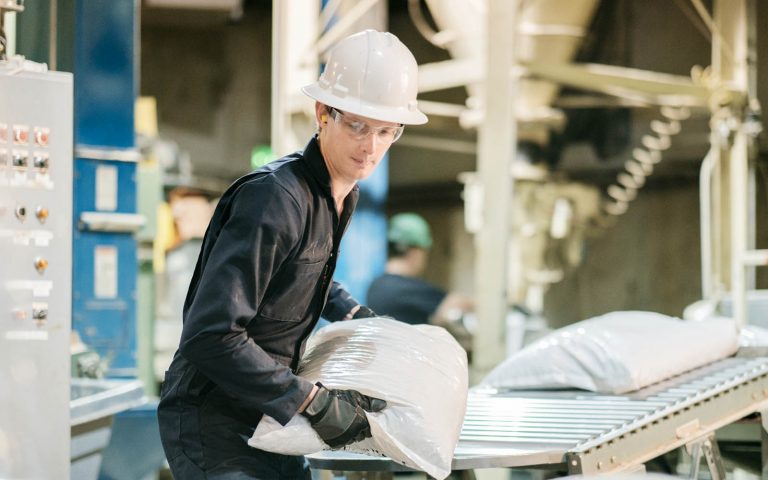
A Musculoskeletal Injury (MSI) risk assessment and ergonomics evaluation aims to identify workplace factors that may contribute to MSI hazards and provide recommendations to minimize or eliminate those risks. Data is collected through supervisor discussion, worker interview, observation, objective measurement of height, length, weight and linear force application and capture and review of digital media (pictures and/or video). Risk is calculated using a variety of tools and calculators such as the WorkSafeBC MSI Risk Assessment tools, REBA, NIOSH Lifting equation and others.
The following includes a brief outline of the data collected for all ergonomic risk assessments:
Risk Factors
Based on the findings, the ergonomics evaluator will identify MSI hazards and propose solutions. A detailed report will be created outlining the physical demands of the job and the identified MSI risks. This report will be shared with workplace leadership and health & safety committees to facilitate the implementation of ergonomic improvements.
Risk mitigation recommendations are provided in accordance with the hierarchy of controls:
Risk Mitigation Controls
Ergonomics is an applied science that can be simply defined as “fitting the job to worker, not the worker to the job”. While most ergonomics evaluations are conducted to address musculoskeletal injury concerns, they can also have further reaching benefits:
The assessment is conducted to evaluate job tasks for potential MSI hazards, such as repetitive movements, awkward postures, excessive force, and prolonged static positions. Employees may be asked to share any discomfort, pain, or difficulties they experience while performing their tasks. This information helps the ergonomics evaluator tailor their recommendations to specific challenges. The goal is to reduce injury risks while enhancing workplace efficiency and employee well-being.
The ergonomics evaluator will visit the workplace to observe and document job tasks, focusing on:
The evaluator may take photographs or videos of job tasks (with employee consent). Visual documentation helps in analyzing ergonomic risks and supports the development of effective recommendations. Any images used in reports will have faces blurred to maintain privacy.
Employees will have an opportunity to provide feedback on their work experiences, including:
The observations, interviews, and data collection often result in workflow interruptions on the day of assessment and productivity will likely be reduced. This should be considered when scheduling.
If you see our approach as a good fit for your organization’s needs, please reach out to us.
MoveSafe is an exceptional program that is delivered by an equally exceptional team. Our employees were thrilled with the training they received and embraced the program wholeheartedly. The team at MoveSafe went above and beyond to ensure that our program launch was seamless and stress-free. What sets MoveSafe apart is their dedication to providing a personalized and attentive approach that catered to our company’s specific needs. We really felt like the MoveSafe team was there for us every step of the way ensuring the program was a success.

